Tuesday, December 17, 2013
My oh My Where Does Time Go?!
Sunday, May 1, 2011
Lilly Kidded!
Sunday, January 23, 2011
Liquid Goat's Milk Soap!
*8 oz. Foaming Bottle w/ pump
Monday, November 15, 2010
NEW Goat's Milk Bath/Body Products!
Goat's Milk Creme' Soap
A new favorite of mine - especially wonderful when used as a shaving cream. It's very thick and creamy so only a little bit goes a long way! Packaged by weight 4.5 - 5+ oz. in each jar. Available in any Essential Oil/Fragrant combination! $6.49 - $7.50 each.
All of the above products (and anything you may find on our website) can be custom made for VEGANS (no Goat's Milk used). Please take a look at the wide selection of Essential and Fragrant oils available:
Essential Oils: Cedarwood Atlas, Tangerine, Sweet Orange, Lavender, Peppermint, Wintergreen, Cinnamon Bark, Bergamot, Citronella Java, Lemongrass, Pink Grapefruit, Eucalyptus.
Fragrant Oils: Sandalwood, Chocolate, Blueberry Lemon Verbena, Rosemary Mint, Chocolate Dipped Strawberries, Lemongrass Sage, Bamboo Sugarcane, Pink Sugar, Yummy Cake, Ginger Lime, Balsam & Citrus, Caribbean Fruit Smoothie, Japanese Pear & Ginseng, Cranberry Ginger Spice Tea, Lemon Sugar, Apple Cobbler Delight, Vanilla Sandalwood, French Crumb Cake, Iced Lemon Snap Cookies, Tropical Passionfruits, Eucalyptus Spearmint, Wild Huckleberry Honey, Blackberry Sage, Chai Tea, Columbian Coffee, Wild African Gardenia, and Plumeria.
Contact me to place an order with these special prices!! :)
Wednesday, October 6, 2010
Hmmm. . .
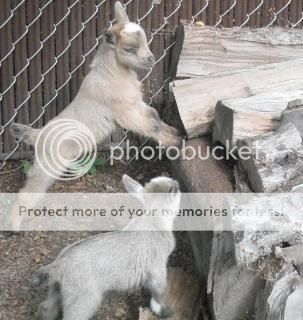
Aha! Remembered something interesting to share. . . My Pygmy doe, Rosie had her babies a couple of weeks ago. She had triplet bucks (bummer) but it was a fairly easy delivery and her boys are happy and healthy, so that's good enough for me. :) The first kid came out without a problem (I actually missed it and reached her after she started cleaning him up). Say hello to little Thaddeus:
He is the smallest of the three boys and is turning out to be a real sweetheart.
Next, came two little rear feet. I assisted slightly as you want the baby out fast when they are born rear feet first. When the umbilical cord is broken it triggers the kid to take a breath (not good when you're still surrounded by fluids). Here is Matthew (aka: the loud mouth ;)
He is the kid in the background of these photos.
And last but not least and certainly the biggest is Bartholomew. He needed the most assistance entering this world. After Matthew was born, I "bounced" Rosie and knew there was another kid in there but she was kind of slow about delivering him so I washed up and "went in" finding a head presenting with no feet, so I gently felt around in there until I found one hoof, cupping my hand around it I carefully moved it up towards the nose and helped Rosie deliver him. With some assistance, a doe can typically deliver a kid in this position without bringing both feet forward.
Bartholomew, aka: the "gentle giant". He is very big, especially in comparison to Thaddeus. Rosie is doing really good so far feeding them all. I've not needed to supplement yet. She's been a very good mother and is very protective of her little ones, even when it's just me around. These are her last babies before retirement and she seems to be enjoying them.
That's all for now!
Tuesday, August 10, 2010
Urban Goat-Keeping Part 4
Super cheap and easy to construct hay feeder:
I took a small piece of "hog panel" and covered with kennel wire (to lessen hay waste) and fixed to our doe's cross-fencing using (don't laugh) bungee cords. :) Hey, I'm a girl and it works! ;) What I like about this feeder is that it allows feeding from both sides of the fence. Our Pygmy does are on one side and the Nigerian girls on the other, they both have access to the hay. This cost next to nothing since I used scrap fencing.
Feed Storage:
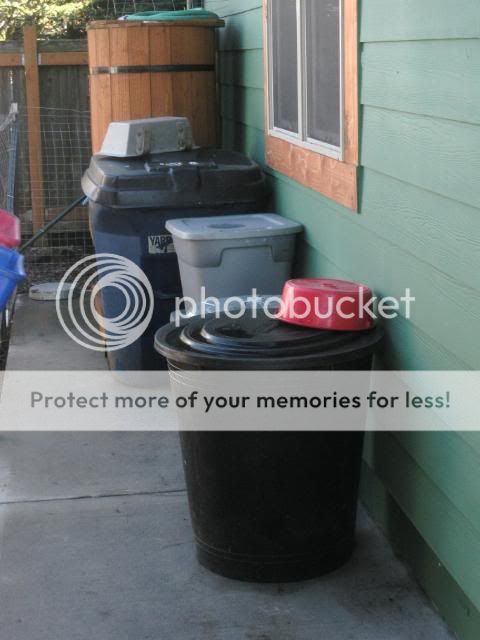
It's important to keep grain and other feeds in sealed bins. This is one of the main concerns with goat-keeping in the city (and country). You do not want rodent problems. When obtaining a permit, they will be very concerned about feed storage.
Cleaning:
I "spot-clean" the goat pen once a day and thoroughly clean once a week. Photos below show the "weekly cleaning". After cleaning up wasted and soiled hay, I spread out a generous amount of baking soda or agricultural dolamite (dehydrated lime) and sometimes follow with cedar-tow shavings. I have been slacking a bit on the cedar shavings lately since they are rather expensive and not completely necessary (but they do smell very nice).
Compost:
Now that we've cleaned the goat pen, what to do with all that poop?! Put it on the compost pile and let nature take over! Easiest part of goat-keeping. :) Honestly, I do absolutely nothing with our compost pile, besides add more goat manure to it. Sometimes my dad will buy some worms to put in but other than that, we just let it sit and break down. Usually one month is all it takes for that hay and manure to turn into rich, black soil.
The photo to your right is our home-made composting pen. We took four pieces of "hog panel" (that stuff is handy!) and bent the pieces to make a somewhat rounded pen with opening gate (so the chickens can go in and out for scratching around).
Well, that's all the photos I have for now. Time for bed! :0
Sunday, August 1, 2010
Goats For Sale
Squaw*Mountain BlueSummerStorm - Mature, blue-eyed buck with gorgeous kids on the ground (mainly doe kids!) All of his babies have been very correct and that's no surprise since he is also. :) While he is a pale gold and white, he has been throwing quite a few red gold kids and many with his blue eyes. Registered with ADGA. Asking $250 - SOLD
Capriola RRH Arrow - A handsome, heavily moon spotted buckling who was reserved almost immediately after birth but unfortunately I cannot get in touch with the buyer. Arrow is very correct in just about every way and has all that "flash" as an extra bonus. ADGA/AGS registration applications included in sale. Asking $300 - SOLD
If you are interested in these boys, let me know by email or phone. I am fairly motivated to find them good homes quickly and prices could be flexible. :)
Friday, May 14, 2010
Sweet Poem
The little goats like my mouth and fingers,
and one stands up against the wire fence, and taps on the fence board a hoof made blacker by the dirt of the field, pushes her mouth forward to my mouth,
so that I can see the smallish squared seeds of her teeth,
and the bristle-whiskers,
and then she kisses me, though I know it doesn't mean "kiss,"
then leans her head way back, arcing her spine, goat yoga,
all pleasure and greeting and then good-natured indifference: she loves me,
she likes me a lot, she takes interest in me, she doesn't know me at all or need to, having thus acknowledged me. Though I am all happiness,
since I have been welcomed by the field's small envoy, and the splayed hoof,
fragrant with soil, has rested on the fence board beside my hand. ~ Mark Doty
Friday, April 23, 2010
Urban Goat-Keeping Part 3
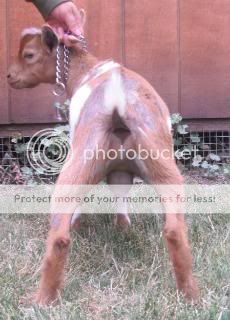
If you are looking for milking does or young does who will be milkers in the future, ask how much milk they give on a daily basis (or with young does, how much their dam gave). A good Nigerian Dwarf doe of average height (about 20-21 inches at withers) should give at least one quart of milk each day, preferably a little closer to 2 quarts. Keep in mind that first-time does will not be milking up to their full potential but improve with each kidding. Look at teat size ( you want large, easy to milk teats that express easily).
The udder should be held up high against the body of the doe. If it is "sagging" this will affect the longevity/productivity of the doe. Her udder will only get worse with age, eventually hanging to the floor causing damage and putting her at risk to develop mastitis. If you are looking at purchasing young does, look at their dam's udder and evaluate the attachments.
Do not be afraid to ask the breeder/owner questions. You, as the buyer, need to be well-informed so as to make the right decision. A good goat owner/breeder will not mind at all answering these questions. Do keep in mind though that everyone is busy and if you are not a serious buyer, it is rude to waste their time.
Saturday, April 3, 2010
Kidding Season!
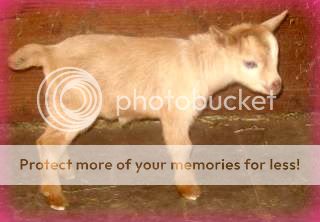
Delais kidded 3/18 with twin, blue-eyed does
Alameda kidded 3/18 with one blue-eyed (polled?) doe
Lyla kidded 4/2 with twins; buck and blue-eyed doe (both are probably polled)
All of our does have had "textbook" deliveries so that is wonderful! A few of the above babies are available to great homes. Lyla's babies are super sweet and friendly!
Next up are Poppy, Claribelle, Magnolia, and hopefully Naughty Lilly (waiting to see if she settled). Photos of pregnant bellies coming soon! Thankfully we spaced kidding dates a little this year - gives us time to give each set of babies lots of love and attention!
Urban Goat-Keeping Part 2
The last posting covered county regulations, fencing, space, etc. . . so this posting will go more into what type of shelter will be required. This really depends on how many goats you would like to have. If you plan on just having two little goats then a large to extra-large dog house will make for sufficient housing. I recommend having one house for each goat in case one does not like sharing. Goats hate the rain and will need to be fed indoors if it's raining, so that presents a problem with using dog houses for shelter -- there is not much space for a feeding area. If you have the means to put together a little shed or barn, this can make things a lot easier. If you live in the Northwest where it rains a lot, then I highly recommend making a larger shelter.
photos coming soon of our little goat barn!
If I could change anything about our current barn, I would make a "porch" for the goats (an overhang near the barn door). Follow this link for an easy plan to make the perfect goat shed.
Saturday, February 20, 2010
Urban Goat-Keeping Part 1
First off, it is very important to find out the regulations for your county. This, I believe, can be found easily by looking up your county on the internet or calling them up to ask. I only know of the rules within Multnomah county; you may own up to three miniature goats without a permit.
Once you've established that it is okay to own goats in your area, do talk with your neighbors about it. For the most part, people we've dealt with enjoy our goats immensely. We've been blessed with great neighbors! :)
Space: For goats to be happy and healthy, they do need space to move around and would greatly appreciate toys to play on. A fenced pen of about 20 x 20 feet is adequate for two miniature goats. If you have more room, all the better! If not, this size will do.
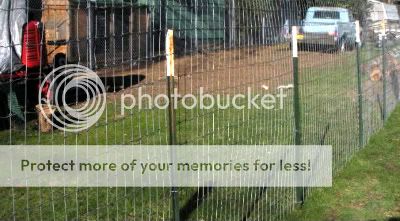
Fencing: Sturdy fencing of adequate height is crucial - not only to keep your prized roses and garden safe ;) but for the goats safety as well. Stray/wandering dogs at the very least, can do much damage to a little goat. Many people I've known have lost their goats to dog attacks. Our preferred fencing is 5 ft. "No Climb" Horse Fencing (easily found at many feed stores, I think even Lowes and Home Depot stock fencing of this type). This fencing looks best (and seems to last longer) when attached to treated wood posts but also works just as well when attached to T-Posts. We've also used a combination of wooden posts and T-Posts and that worked very well. It looks nice and is durable. I recommend spacing the posts 6 to maybe 8 feet apart.
Goats are not too terribly hard on fencing but you will find that they love to rub alongside it (especially in the spring when their winter coats are shedding). This can be a little rough on the fence-line so I suggest doing the best you can to make that fencing durable. It's no fun constantly making repairs!
Well, I guess that's all for now - more to come soon!